Mediterranean lunch ideas / From Lolly's Kitchen
How to Build a Mediterranean Lunch from What's in the Fridge
Good olive oil, a few things lurking in the fridge and absolutely no need for a recipe.

There is something rather lovely about a lunch that hasn't been planned. The best Mediterranean lunch ideas often begin not with a shopping list, but with a slightly optimistic rummage through the fridge. Half a cucumber, a few roasted peppers, some feta that needs eating and a jar of olives you've almost forgotten about.
Individually, perhaps not terribly exciting. Together, with a little thought and some very good olive oil, they can become the sort of lunch you'd happily linger over.
I like cooking this way. No measuring, no elaborate preparation. Just a plate of things that taste particularly good together. And, as it turns out, there's quite a lot we can borrow from the kitchens of Greece, Italy, Spain, Sicily and Türkiye along the way.
A lunch from almost nothing
You don't need every component, but these four little decisions will rescue almost any collection of fridge odds and ends.
- Start with a vegetable. Fresh tomatoes or cucumber, leftover roast courgettes, peppers or a handful of leaves.
- Add something substantial. Butter beans, lentils, chickpeas, an egg, tinned fish, feta or leftover chicken.
- Make a contrast. Something creamy, salty, crunchy or pickled. Often just one is enough.
- Finish it properly. Olive oil, herbs, lemon, vinegar and seasoning. Taste before you add anything else.

Let the vegetables lead
I tend to begin with whatever looks most promising. Perhaps it's a couple of tomatoes, properly ripe and smelling of the vine. Or the courgettes roasted yesterday, their edges slightly caramelised and their centres wonderfully soft. A handful of rocket, a lonely red pepper, half an aubergine.
Vegetables don't need to be relegated to the side of the plate. They can be the whole point of it.
Cold roasted vegetables are particularly good for this. Aubergines become wonderfully silky once they've had time to sit in olive oil. Peppers taste sweeter. Courgettes seem to welcome whatever dressing you introduce them to. If everything in the fridge is raw, that's fine too: thinly sliced fennel, cucumber, radishes and tomatoes have their own pleasures.
Then give it a little substance
A plate of beautiful vegetables is all very well, but I'd rather not be back in the fridge half an hour later. Butter beans are a favourite of mine: creamy, substantial and wonderfully obliging when introduced to lemon and herbs. Cannellini beans, chickpeas or lentils do the job just as happily.
There's fish, too. Leftover salmon, smoked mackerel or a good tin of tuna turns vegetables into a proper lunch. Boiled eggs, leftover chicken, feta, halloumi and thick Greek yoghurt all have their place. You don't automatically need bread, rice or pasta to hold everything together, although there's no reason to banish them if that's what you fancy.
The point is to let what's already there do most of the work.
A few things Mediterranean kitchens know
What I love about Mediterranean cooking is how often the best results come from small, thoughtful techniques rather than extravagant ingredients. These are regional traditions, not rules for how an entire coastline eats. But each has something rather useful to teach us at lunchtime.
Let the vegetables take their time
Greek ladera are vegetables cooked gently with olive oil, often tomato, onion, garlic and herbs, until everything becomes tender and deeply flavoured. They can be lovely served warm rather than piping hot. The fridge-lunch lesson isn't that yesterday's roasted courgettes are a traditional ladera; it's that soft, well-seasoned vegetables deserve the centre of the plate. Add feta, mint and lemon, and those leftovers feel entirely intentional.
Excellent olive oil can be the dressing
The Italian tradition of pinzimonio is gloriously straightforward: crisp raw vegetables and good olive oil for dipping, seasoned with salt and pepper, sometimes lemon. A crunchy radish through peppery oil, a piece of fennel with its faint aniseed sweetness, a ripe tomato with flaky salt. It's a reminder that you don't always need to make a sauce. Sometimes adding less is exactly right.
Celebrate the tin of fish
Spain's conservas tradition treats beautifully preserved seafood as something worth seeking out, not just the emergency option at the back of a cupboard. Sardines, anchovies, tuna and mussels often need very little embellishment. Buy a tin you enjoy, then serve it with ripe tomatoes, beans, olives or roasted peppers. Lunch doesn't have to involve cooking to feel like a proper meal.
Beans deserve a really good dressing
In Antalya, tahinli piyaz brings white beans together with a tangy tahini dressing, and often tomato, parsley and boiled egg. I love the principle: the beans are the star, rather than a token spoonful at the edge of a salad. For an unplanned lunch, try butter beans tossed with lemon, tahini and a little water, then add cucumber and herbs. Inspired by piyaz, rather than pretending to be the traditional dish.
Something sharp makes you want another forkful
Sicilian caponata is famous for its agrodolce balance: sweet and sour, often built with vinegar and sugar alongside aubergine, celery, olives and capers. You can borrow that contrast without cooking a full caponata. Try sweet roasted peppers with a splash of red wine vinegar, or silky aubergine with briny capers. The sharpness is what wakes everything up.
A good lunch is often less about what you've got, and more about what you do to it.
Three lunches from an almost-empty fridge
These aren't recipes in the conventional sense. Think of them as three starting points, open to substitutions and whatever needs eating today.
Butter beans, courgettes & feta
Warm butter beans gently in olive oil with a little garlic and some leftover roasted courgettes. Spoon onto a plate, crumble over feta, then finish with lemon zest, torn mint and black pepper. Toasted almonds are lovely if there's a handful about.
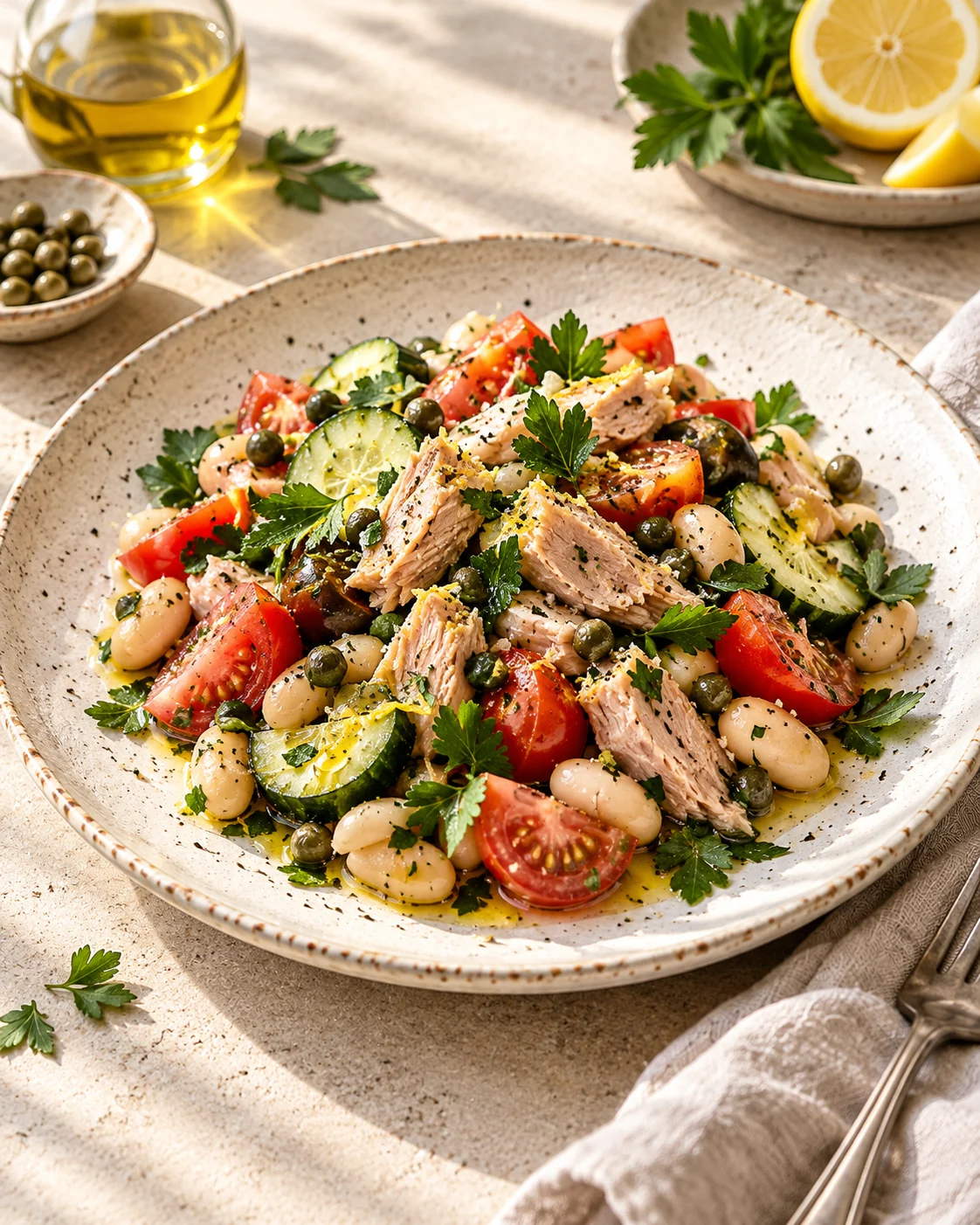
Tuna, tomatoes & white beans
Flake good tinned tuna over ripe tomatoes, crunchy cucumber and a few spoonfuls of cannellini beans. Add parsley, capers and plenty of lemony olive oil. Let the tomato juices mingle with the dressing, then eat without too much fuss.
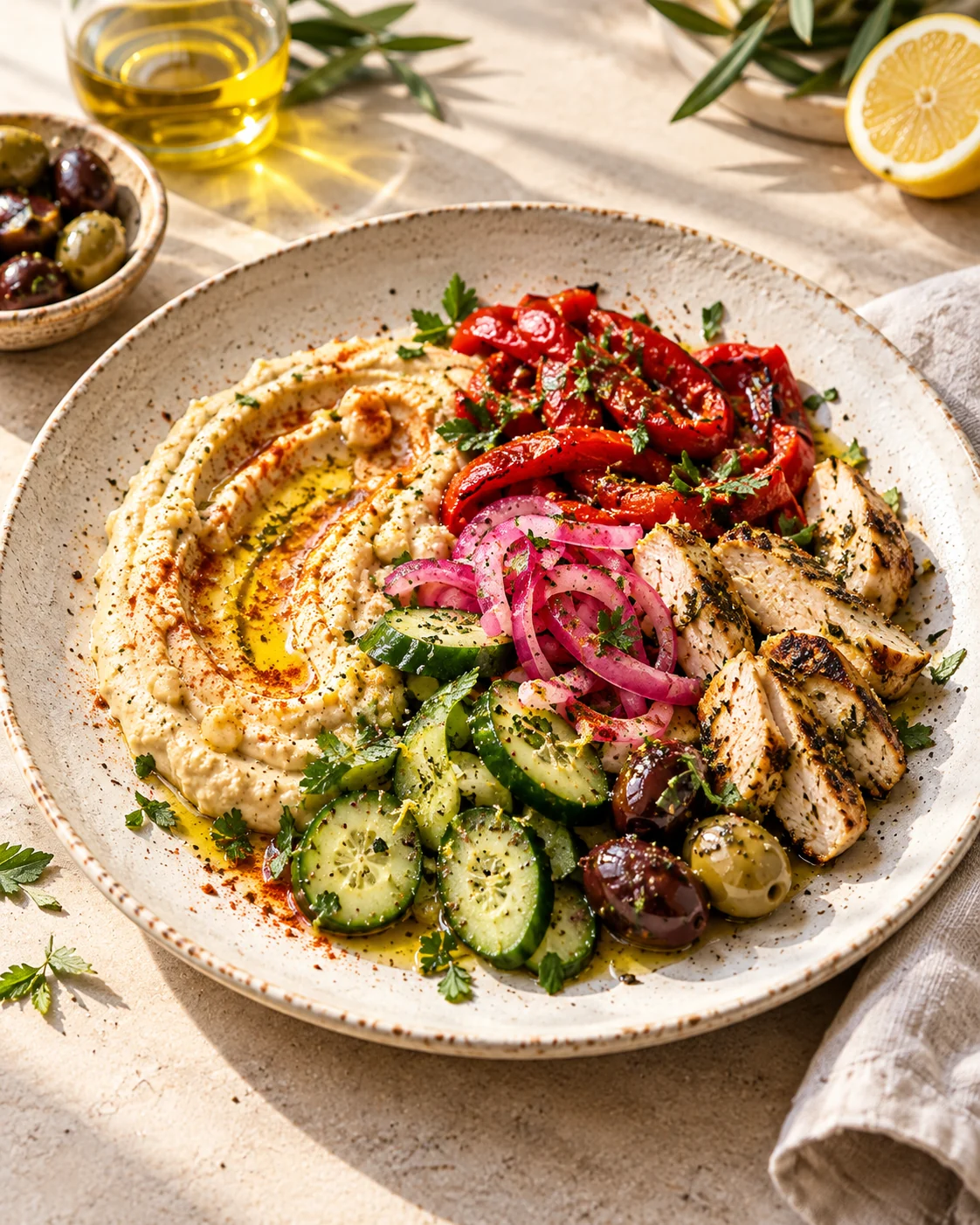
Hummus & all the extras
Spread a generous spoonful of hummus across a plate. Add roasted peppers, cucumber, leftover chicken and a few pickled onions. Perhaps an egg, some olives or herbs. Finish with olive oil and a scattering of smoked paprika. If you've only got three things, use three.
Treat these as combinations, not shopping lists. Swap feta for yoghurt, tuna for an egg, or butter beans for chickpeas.
Three little dressings that change everything
A good dressing is often the difference between a collection of ingredients and something that feels like a finished dish. These are loose ideas rather than rules, so taste as you go.
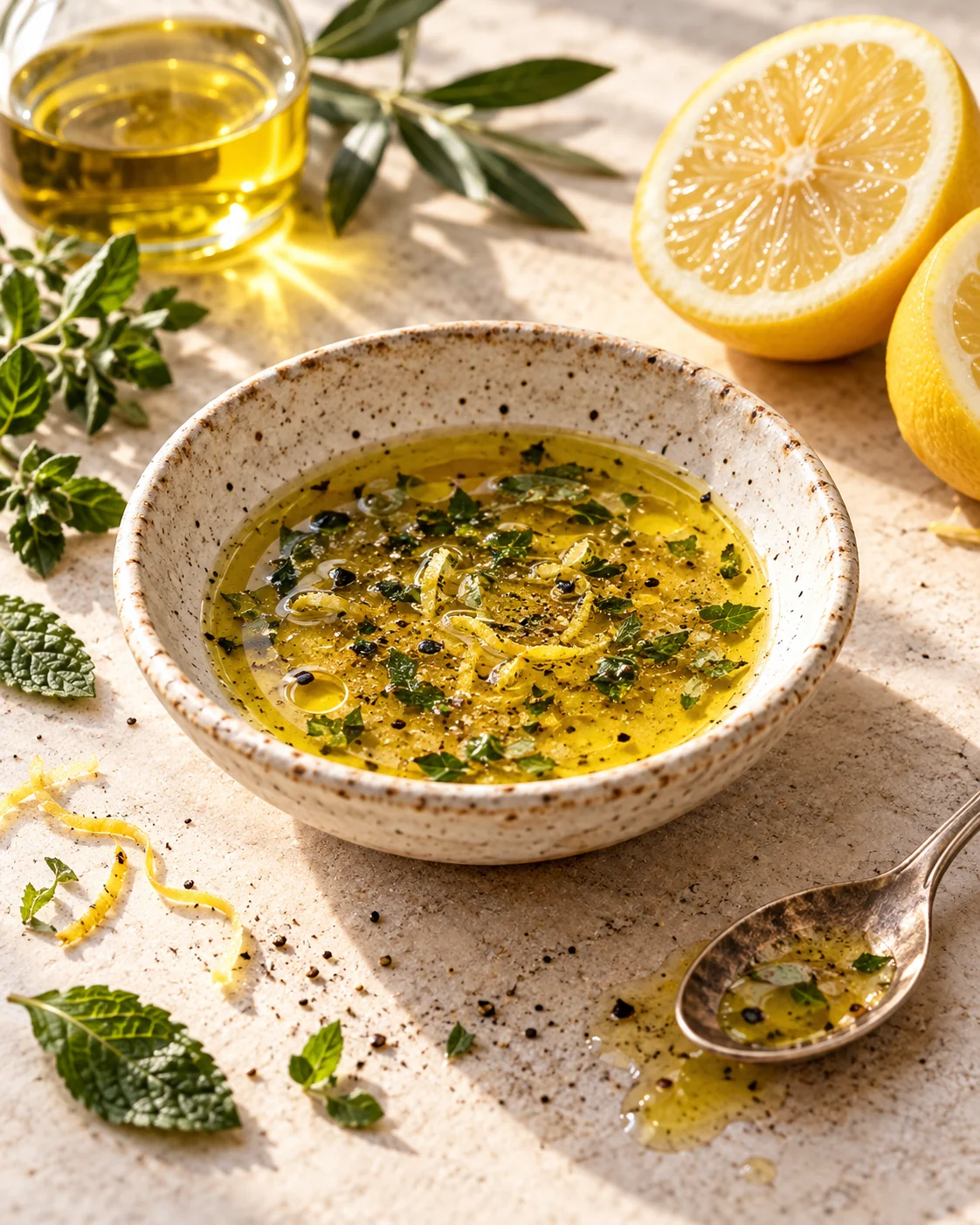
- 1. The Greek lemon and olive oil dressing
Ladolemono is olive oil and lemon juice whisked or shaken until they come together. Start with roughly three parts oil to one part lemon, then adjust. Add oregano or grated garlic if you fancy. Lovely over fish, vegetables and beans.
- 2. The herby yoghurt
Loosen thick Greek yoghurt with lemon juice and stir through chopped mint, dill or parsley. A little garlic, olive oil and black pepper make it even better. Good with charred vegetables, chicken or boiled eggs.
- 3. The sharp little vinaigrette
Shake extra virgin olive oil, red wine vinegar, Dijon mustard and salt in a jar. Taste until it's pleasantly sharp, not aggressively vinegary. Pour over lentils, tomatoes or leftover peppers. A splash of pickled-onion vinegar is excellent here, too.
The tiny details that make the difference
Dress beans while they're warm. They'll take on lemon, oil and herbs beautifully.
Save the crunch for last. Keep cucumber, radishes and toasted nuts out of the dressing until you're ready to eat.
Taste for acidity first. Before adding more salt, try lemon or a few drops of vinegar.
Be generous with herbs. Not three carefully arranged parsley leaves. A proper handful.
And if the fridge is genuinely rather bare? A tin of white beans, a jar of peppers, an anchovy or two and a good dressing can still become lunch. That's the beauty of a well-loved cupboard.
A good lunch doesn't need a recipe
I think that's what appeals to me most about this way of eating. It encourages you to pay attention. To notice what's already in the fridge, what needs using, what might taste lovely with something else.
Sometimes the result is a very respectable bowl of beans and roasted vegetables. Other times it's a few bits and pieces on a plate, brought together by lemon and enough olive oil to make them feel like lunch.
Either way, it's food made with a little thought and eaten with a little pleasure. Which, when you think about it, is a rather good way to spend lunchtime.
Love, Lolly x
Curious about the Mediterranean traditions? Sources and further reading
These regional dishes inspired the techniques above; the improvised fridge lunches are my own interpretations, not traditional recipes.