
Not much in the fridge? But just enough to make something you’ll think about later.
Hey Lolly
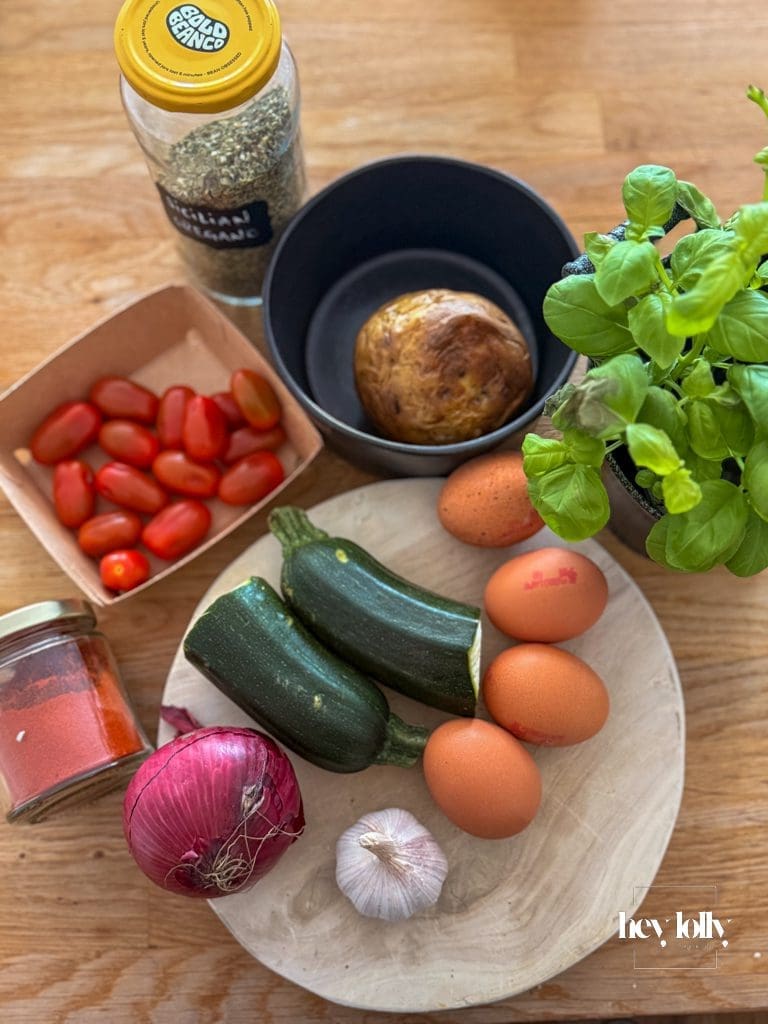
This fridge raid frittata starts in that familiar place, the fridge door open, not much jumping out, and the quiet realisation that you’re going to have to make something out of what’s there.
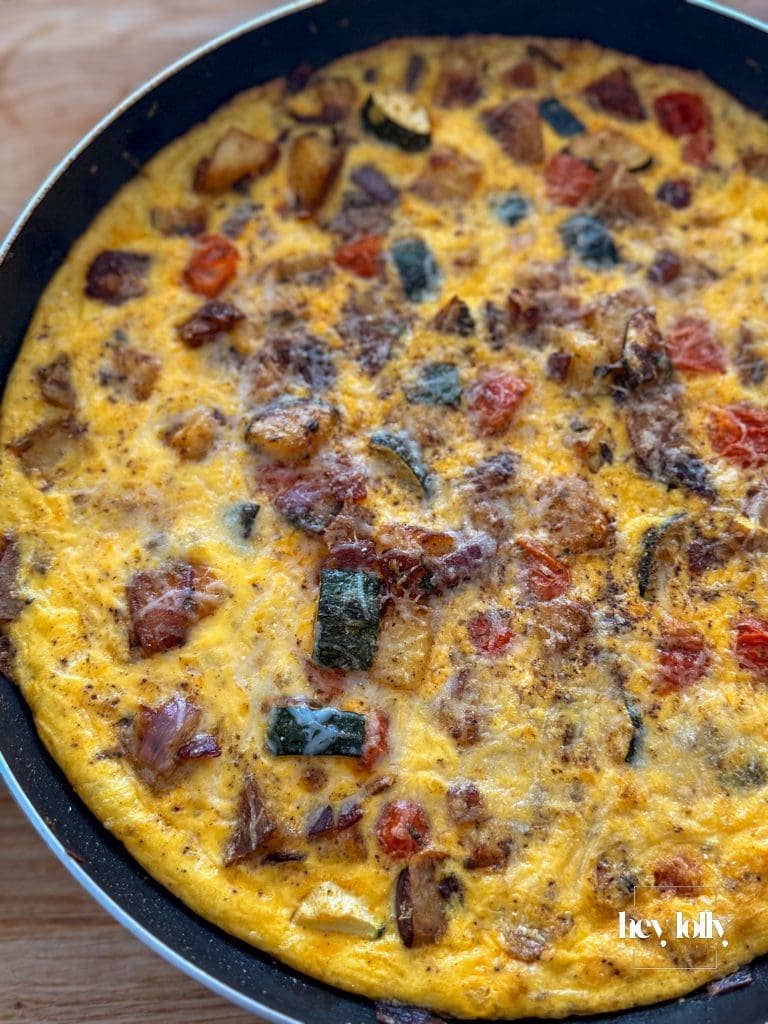
A courgette, slightly past its moment. A baked potato that was leftover from something else. A lonesome red onion, a few tomatoes, eggs that always seem to be hanging around. On their own, none of it feels like much.
But give it a pan, a bit of heat, and a little patience, and it shifts. The kind of cooking that turns “not much” into something genuinely worth sitting down for.
The Golden Ratio (The Only Bit Worth Remembering)
If there is one thing to hold onto, it’s this:
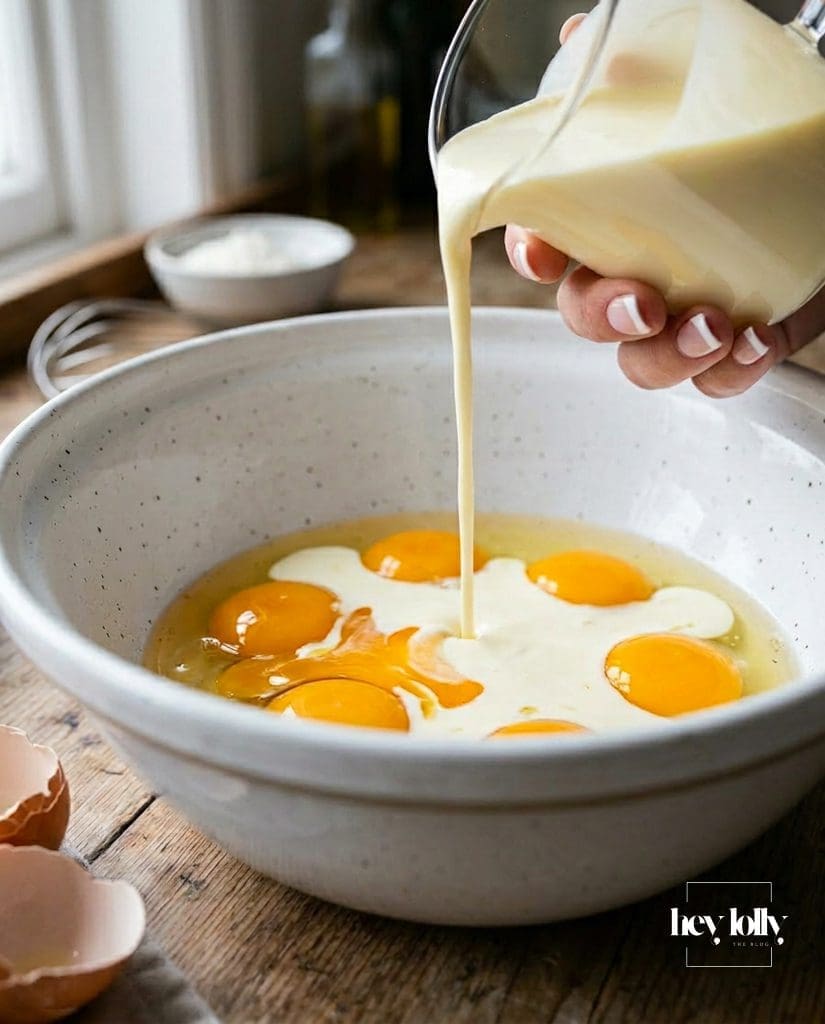
6 eggs → roughly 60ml (¼ cup) cream or milk
Not enough to make it heavy, just enough to soften the set. You don’t need to measure it precisely, but once you’ve done it a couple of times, you’ll feel when it’s right. The eggs loosen slightly, the texture becomes softer, and the whole thing sets without turning firm or dry.
Fridge Raid Substitutions (What Works, What Doesn’t)
This is where most frittatas go wrong, not the idea, just the order of what and when to cook.
Cook first (always) These hold water or need softening. Skip this step and the whole thing turns flat.
- onions
- potatoes
- mushrooms
- courgette
- peppers
Can go in right at the end. These either wilt quickly or are already where they need to be.
- spinach
- herbs
- tomatoes
- cooked leftovers (roast veg, meats)
Once you understand that, you can open the fridge and know instinctively what goes in when.
On Texture (and Why Some Frittatas Miss the Mark)
A frittata should never feel tight.
It should give a little when you press into it, soft in the centre, just set at the edges, somewhere in between the two that feels right without needing to think about it.
Eggs don’t need much to go too far. A touch too much heat, a minute longer than necessary, and that softness slips. What was delicate becomes firm, then something slightly less forgiving.
You can see it as much as you can feel it, the surface loses its sheen, the middle stops moving altogether, the whole thing settles a bit too definitively.
There’s something satisfying about using things up properly, not just out of necessity, but because it actually tastes better that way. If you’re looking to waste less in the kitchen, WRAP’s Love Food Hate Waste has some genuinely useful guidance.
A Few Things Worth Knowing
Why is my fridge raid frittata watery?
It’s almost always the veg.
Courgette, mushrooms, even onions, they all hold more water than you think. If they go straight in, that water has nowhere to go once the eggs set, so it sits there.
Give them a bit of time in the pan first. Let the moisture cook off, let them soften properly. You’ll notice the difference straight away, everything feels more settled, more concentrated.
Can I make a fridge raid frittata in an air fryer?
You can, but it changes slightly.
Use a small oven-safe dish, keep the temperature around 160–170°C, and give it 10–15 minutes depending on depth. It won’t get quite the same base you’d get from a pan, but it sets well and still holds together.
It’s more of a gentle set than a proper stovetop finish, but it works when you need it to.
How do I reheat it without it turning tough?
Low and slow, always.
A microwave will do it, but keep the power down and don’t rush it. Too much heat and the eggs tighten again, which is what you’re trying to avoid.
If you’ve got a few extra minutes, the oven is better. Just warm it through, nothing more.
Or don’t reheat it at all.
Cold frittata, straight from the fridge, is quietly one of the best versions of it. Promise!

P.S. If this is your kind of brunch, you’ll probably love my Turkish Eggs or Mexican Breakfast Tacos – both provide brunch energy in delicious and different ways!
Ingredients
For the frittata
- 6 free-range or organic eggs
- 2 tbsp double cream
- 1 courgette diced
- 1 large cooked potato diced
- ½ red onion diced
- 150 g cherry tomatoes halved
- 1 garlic clove crushed
- 1 tsp smoked paprika
- 1 tsp dried oregano
- 1 knob of butter
- 1 drizzle of olive oil
- 150 g shaved or grated parmesan cheese
- Salt and black pepper to taste
Instructions
Build the base
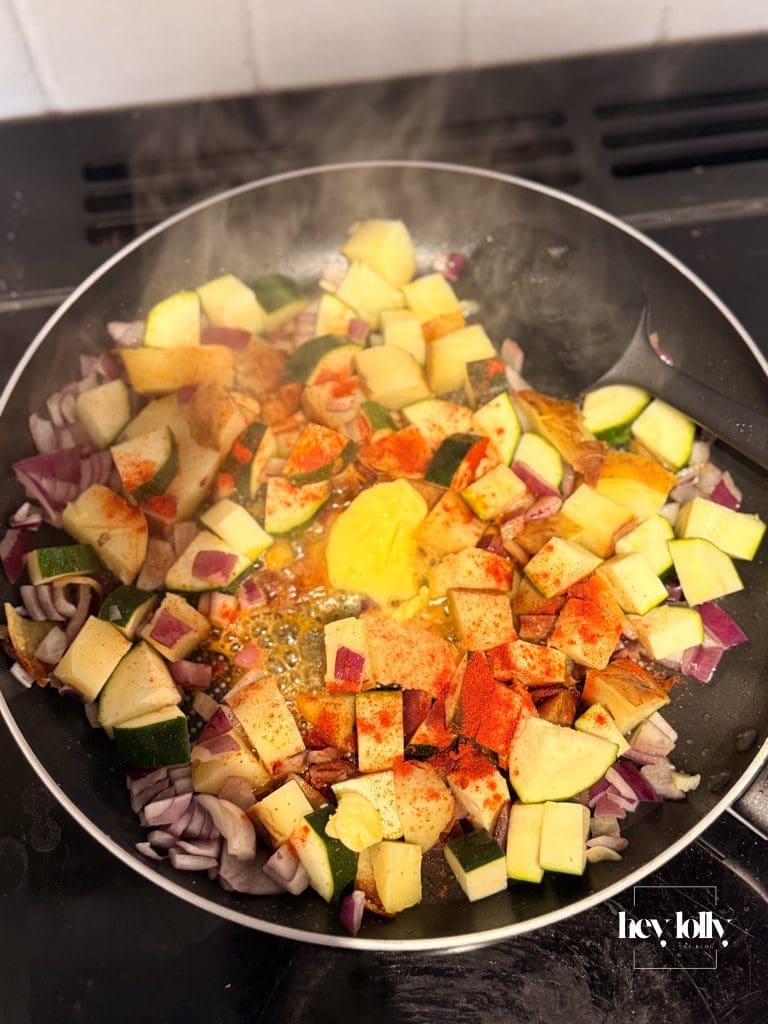
- Heat the olive oil in a frying pan over a medium heat. Add the red onion and cook gently until softened and slightly sweet.
- Add the potato
- Add the diced cooked potato and leave it to colour slightly before stirring.
Cook the vegetables
- Add the courgette and cook until softened and any excess moisture has cooked off. Stir in the garlic briefly.
Build the flavour
- Add the butter and let it melt through the pan. Stir in the smoked paprika and allow it to warm through.
- Add the tomatoes
- Stir through the cherry tomatoes so they soften but still hold their shape.
Prepare the eggs
- Whisk the eggs with the double cream, salt, black pepper and half of the grated parmesan.
- Add the eggs
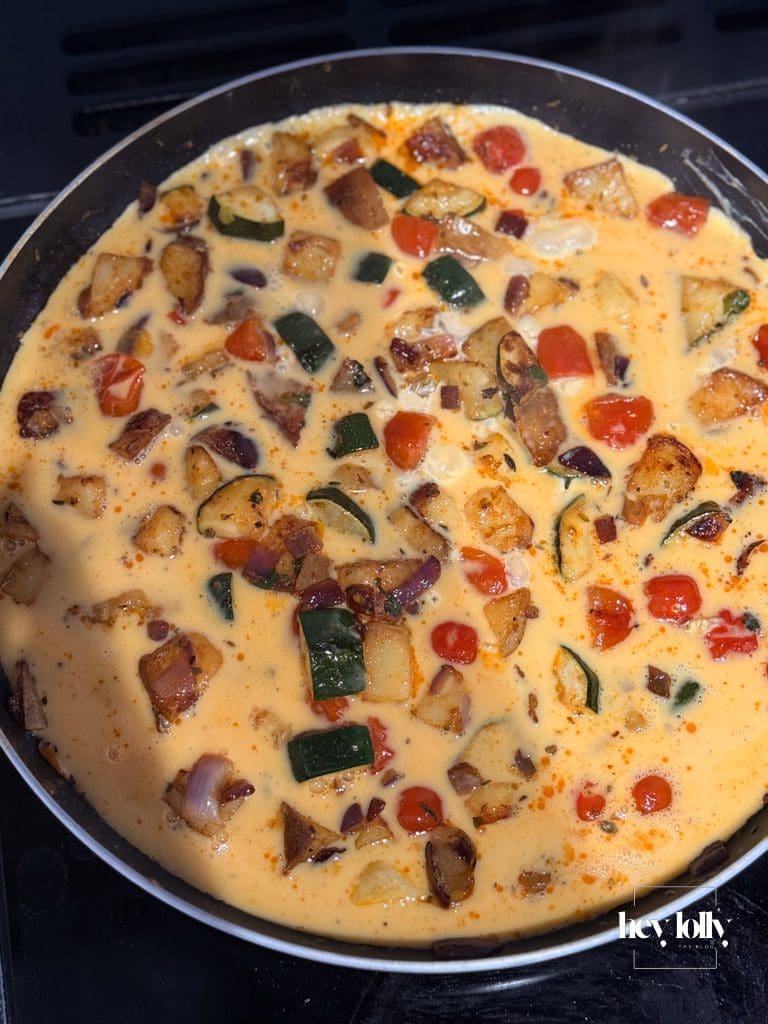
- Pour the egg mixture into the pan and gently shake to distribute everything evenly.
Cook gently
- Cook over a low heat until the edges are set and the centre is still slightly soft.
- Finish under the grill
- Place under the grill for 2–4 minutes, until just set and lightly golden.
Serve
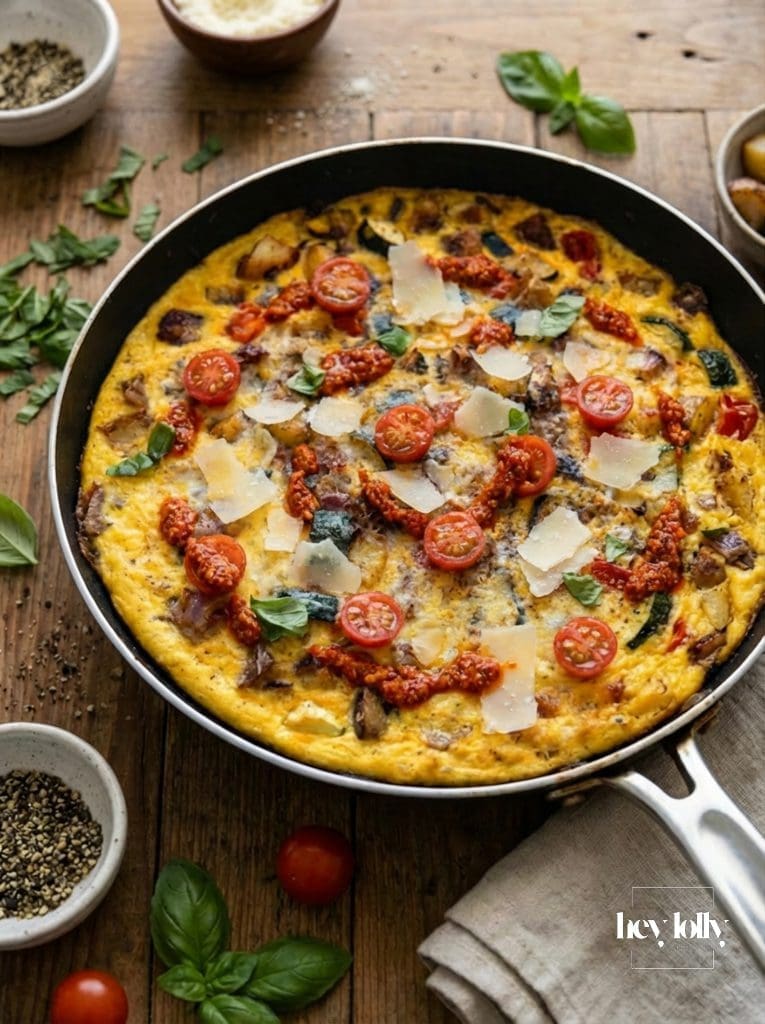
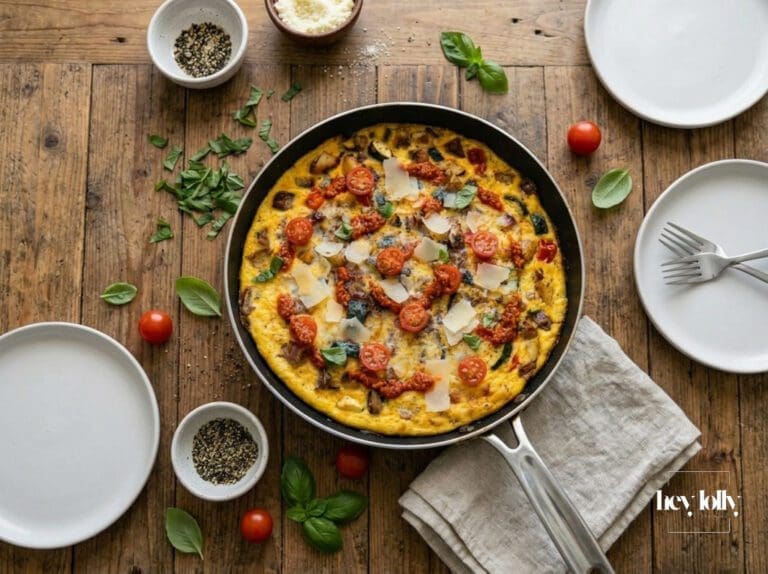
- Finish with the remaining shaved or grated parmesan over the top and serve warm.
Notes
- Cook the courgette properly before adding the eggs. It holds more water than you think, and rushing it can make the frittata loose.
- Keep the heat low once the eggs go in. You want a soft set, not a rubbery one.
- The grill finish is quick, so stay close. Two minutes can be the difference between gently golden and overdone.
- Parmesan works twice here: melted into the eggs for savoury depth, then scattered over the top for that salty finish.
- Cold leftovers are lovely the next day, especially with salad, toast or a little chilli oil.
- This is flexible by nature — just cook watery vegetables first and add delicate bits, like herbs or tomatoes, nearer the end.